
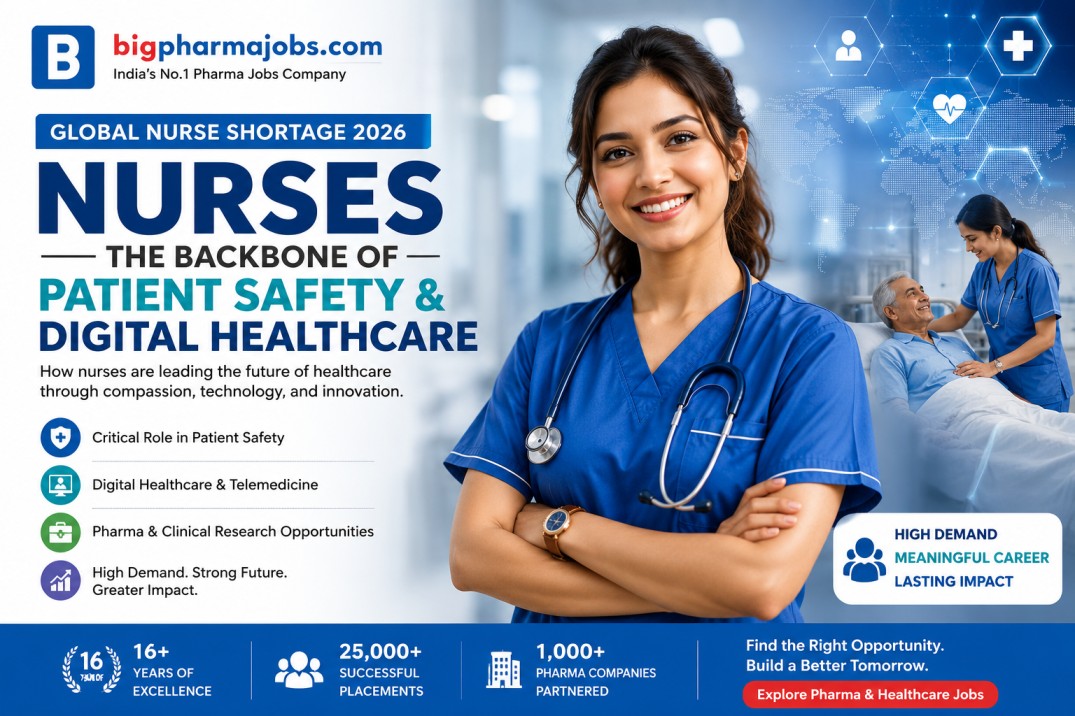
Global Nurse Shortage 2026: Why Nurses Are Becoming the Backbone of Digital Healthcare and Patient Safety
Healthcare systems across the world are facing one of the most critical workforce crises in modern history — a growing global nurse shortage. From hospitals and pharmaceutical care centers to telemedicine platforms and clinical research ecosystems, the demand for skilled nurses is rising faster than healthcare organizations can recruit and retain talent.
At the same time, the role of nurses is evolving dramatically.
Today’s nurses are no longer limited to bedside care alone. They are becoming essential contributors to patient safety, digital healthcare adoption, chronic disease management, clinical coordination, remote monitoring, healthcare compliance, and pharmaceutical patient-support programs.
For India’s rapidly expanding healthcare and pharmaceutical industry, this transformation is creating major employment opportunities and redefining the future of healthcare careers.
The Global Nurse Shortage Is Reshaping Healthcare
According to healthcare workforce experts, the shortage of trained nursing professionals has become a major challenge for hospitals, healthcare providers, pharmaceutical companies, and public health systems worldwide.
Several factors are contributing to the crisis:
Aging populations increasing healthcare demand
Rising chronic disease burden
Burnout among healthcare professionals
Migration of skilled nurses to developed countries
Expansion of digital healthcare services
Increased demand for home healthcare and remote patient management
Countries across Europe, the Middle East, North America, and Asia are aggressively recruiting nursing talent, creating unprecedented opportunities for qualified healthcare professionals from India.
India itself is witnessing strong growth in:
Hospital infrastructure
Clinical research operations
Pharma patient-support programs
Telehealth platforms
Digital therapeutics
Home healthcare services
Medical device support ecosystems
As a result, nursing professionals are becoming central to modern healthcare delivery.
Why Nurses Are Critical to Patient Safety
Patient safety has become one of the biggest priorities for healthcare organizations globally. Medication errors, infection control, treatment coordination failures, and communication gaps can directly affect patient outcomes.
Nurses play a frontline role in reducing these risks.
Clinical Monitoring and Early Intervention
Nurses are often the first healthcare professionals to identify patient deterioration, adverse drug reactions, or treatment complications.
Their ability to monitor patient conditions in real time significantly improves survival rates and treatment quality.
Medication Safety Management
With increasingly complex therapies and specialty drugs entering the market, nurses are becoming key contributors to medication administration accuracy and patient adherence monitoring.
This is especially important in:
Oncology
Critical care
Biologics administration
Rare disease therapies
Chronic disease treatment programs
Infection Prevention and Healthcare Compliance
Post-pandemic healthcare systems are placing enormous emphasis on infection control, patient hygiene standards, and hospital compliance frameworks.
Experienced nurses now work closely with:
Quality assurance teams
Hospital compliance units
Clinical governance departments
Pharmacovigilance professionals
Healthcare accreditation bodies
The Rise of Digital Healthcare Is Expanding Nursing Careers
One of the biggest healthcare transformations in 2026 is the integration of digital healthcare technologies into patient management systems.
Nurses are now operating at the center of this digital revolution.
Telemedicine and Remote Patient Monitoring
Healthcare providers increasingly rely on nurses to:
Conduct virtual patient assessments
Monitor chronic disease patients remotely
Support post-discharge follow-ups
Improve patient adherence through digital communication
Coordinate virtual healthcare services
Telehealth adoption has opened new remote-care career pathways for nursing professionals.
Electronic Health Records and Clinical Data Management
Modern healthcare systems depend heavily on accurate digital documentation and patient-data coordination.
Nurses are becoming important stakeholders in:
Electronic Health Record (EHR) systems
Clinical workflow optimization
Healthcare analytics
Patient data accuracy
Digital compliance management
This intersection of healthcare and technology is creating hybrid healthcare-tech job opportunities.
AI and Smart Healthcare Systems
Artificial intelligence is improving diagnostics and healthcare operations, but human-centered care remains irreplaceable.
Nurses are increasingly expected to work alongside:
AI-assisted monitoring tools
Smart ICU systems
Predictive healthcare platforms
Digital patient engagement systems
The future healthcare workforce will require both clinical expertise and digital adaptability.
Pharmaceutical Industry Opportunities for Nurses
The pharmaceutical sector is creating entirely new career paths for nursing professionals beyond traditional hospital roles.
Patient Support Programs (PSPs)
Pharmaceutical companies increasingly hire nurses for patient education and therapy management initiatives.
Responsibilities include:
Educating patients about treatment protocols
Monitoring therapy adherence
Managing follow-up communication
Supporting specialty drug programs
Handling patient counseling
Clinical Research and Trials
India’s expanding clinical research ecosystem is generating demand for:
Clinical research nurses
Trial coordinators
Patient recruitment specialists
Site management professionals
Pharmacovigilance associates
Nurses with clinical exposure often transition successfully into research-oriented pharma careers.
Pharmacovigilance and Drug Safety
Drug safety monitoring is another fast-growing area where nurses are highly valued because of their clinical understanding.
Common roles include:
Drug safety associate
Medical reviewer
Case processing executive
Adverse event reporting specialist
Nursing Skills That Are Becoming Highly Valuable in 2026
Healthcare employers are now prioritizing multi-skilled nursing professionals who can combine patient care expertise with digital and communication capabilities.
Clinical Competency
Strong patient assessment and treatment-support capabilities remain essential.
Digital Literacy
Knowledge of EHR systems, telehealth tools, and healthcare software platforms is becoming increasingly important.
Communication Skills
Patient counseling and multidisciplinary coordination are now core healthcare functions.
Critical Thinking
Healthcare systems value nurses who can make rapid and informed decisions under pressure.
Regulatory Awareness
Understanding healthcare compliance and patient safety protocols improves employability.
India’s Growing Demand for Nurses Across Healthcare Sectors
India’s healthcare industry is projected to continue expanding due to:
Rising healthcare investments
Hospital expansion projects
Medical tourism growth
Increased insurance penetration
Digital health adoption
Pharmaceutical industry growth
This is increasing demand for nurses across:
Hospitals
Pharma companies
CROs
Telehealth startups
Diagnostic chains
Home healthcare providers
Medical device firms
Healthcare recruitment experts believe specialized nursing professionals with digital healthcare exposure will remain in strong demand over the next decade.
Salary Trends for Nursing Professionals in India
Compensation varies based on specialization, location, experience, and industry segment.
Average Salary Ranges in 2026
Role | Estimated Annual Salary |
|---|---|
Staff Nurse | ₹2.5 LPA – ₹5 LPA |
ICU/Critical Care Nurse | ₹4 LPA – ₹8 LPA |
Clinical Research Nurse | ₹5 LPA – ₹9 LPA |
Pharmacovigilance Associate | ₹4.5 LPA – ₹10 LPA |
Patient Support Nurse | ₹5 LPA – ₹12 LPA |
Telehealth Nurse Coordinator | ₹4 LPA – ₹9 LPA |
Metro cities such as Ahmedabad, Mumbai, Hyderabad, Bengaluru, Pune, and Chennai continue to offer strong healthcare hiring opportunities.
Future of Nursing Careers: Beyond Traditional Healthcare
The future of nursing is shifting toward integrated healthcare ecosystems where clinical care, technology, pharmaceuticals, patient engagement, and preventive medicine work together.
Emerging opportunities include:
Digital health coaching
Remote care coordination
AI-assisted healthcare operations
Specialty therapy support
Healthcare analytics support
Pharma patient engagement
Clinical operations management
Nurses who continuously upgrade their skills will be well-positioned for long-term career growth.
Why Healthcare Employers Are Prioritizing Retention
Healthcare organizations are no longer focused only on hiring. Retention and workforce well-being are becoming strategic priorities.
Leading employers are investing in:
Flexible work structures
Mental health support
Upskilling programs
Digital training
Career progression pathways
International exposure opportunities
Healthcare leaders increasingly recognize that patient outcomes are directly connected to nursing workforce stability.
Career Opportunities Through BIG PHARMA JOBS
As India’s pharmaceutical and healthcare industries continue expanding, the need for qualified nursing and healthcare professionals is expected to rise significantly.
BIG PHARMA JOBS, operated by BIG IDEAS HR Consulting Pvt. Ltd., connects healthcare professionals with leading employers across:
Pharmaceutical companies
Hospitals
Clinical research organizations
Healthcare technology firms
Telemedicine providers
Medical device companies
With 16+ years of pharmaceutical recruitment expertise, 25,000+ successful placements, and partnerships with 1,000+ pharma companies, BIG PHARMA JOBS helps professionals discover high-growth healthcare career opportunities across India.
Whether you are an experienced nurse, clinical research professional, or healthcare graduate exploring pharma industry careers, the future healthcare ecosystem offers multiple pathways for growth.
Conclusion
The global nurse shortage is not only a workforce challenge — it is transforming the healthcare industry itself.
Nurses are becoming central to:
Patient safety
Digital healthcare delivery
Chronic disease management
Pharmaceutical patient engagement
Clinical research operations
Healthcare innovation
As healthcare systems continue evolving, skilled nursing professionals will remain among the most valuable contributors to patient care and healthcare sustainability.
For professionals willing to embrace technology, continuous learning, and multidisciplinary healthcare roles, the future of nursing careers looks stronger than ever.
Weekly newsletter
Get the latest blog updates, practical hiring insights, and featured reads delivered straight to your inbox.
Read about our Privacy Policy.