
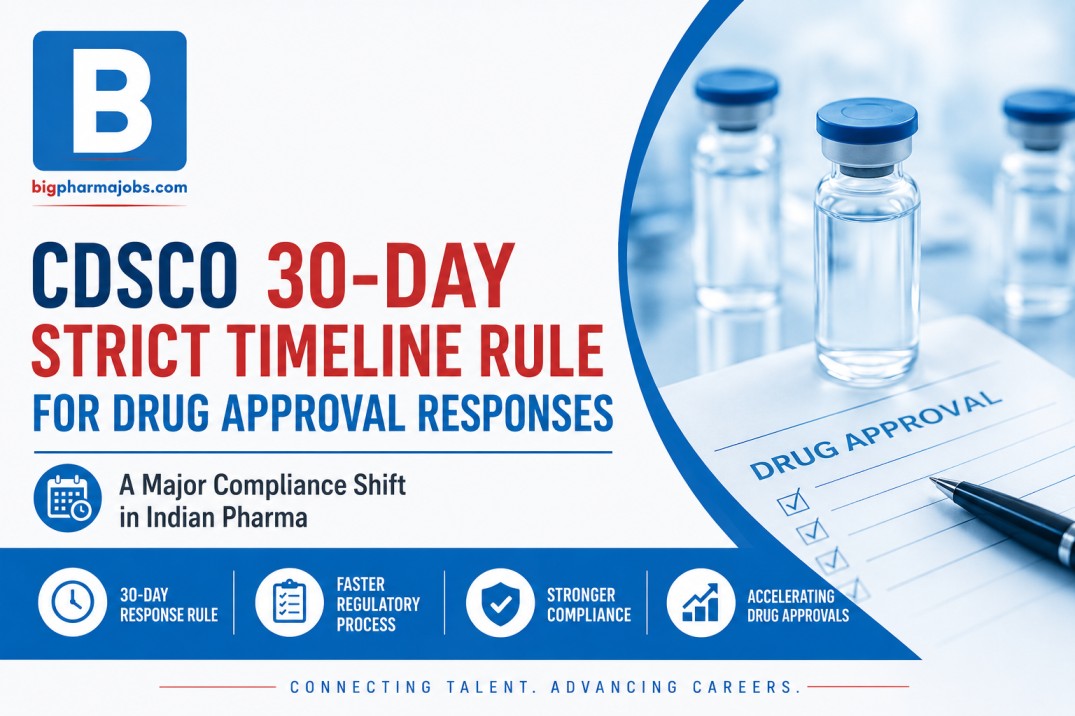
🧪 CDSCO 30-Day Strict Timeline Rule for Drug Approval Responses: A Major Compliance Shift in Indian Pharma
India’s pharmaceutical regulatory system is entering a new phase of discipline and speed.
The recent CDSCO 30-day strict timeline rule for drug approval responses marks a significant shift in how pharmaceutical companies interact with regulatory authorities. Under this updated framework, companies must respond to regulatory queries within 30 days, or risk rejection or procedural setbacks in their application process.
This change is not just administrative—it is a structural reform that directly impacts regulatory strategy, documentation practices, and overall drug approval success rates in India.
⚖️ What Is the 30-Day CDSCO Response Rule?
Under the updated regulatory expectation, pharmaceutical companies must:
Respond to CDSCO queries within 30 days
Submit complete clarifications without delays
Ensure documentation readiness at all stages
Avoid repeated extensions or incomplete submissions
Failure to respond within the timeline may result in:
Application rejection
Delayed review cycles
Increased regulatory scrutiny
Requirement for re-submission
This introduces a more time-bound compliance culture in Indian drug regulation.
🧭 Why This Rule Has Been Introduced
The Indian pharmaceutical sector has experienced rapid growth in:
New drug applications
Clinical trial submissions
Generic and biosimilar filings
Import/export registrations
However, regulatory bottlenecks often occurred due to delayed responses from applicants.
The 30-day rule aims to:
1. Improve Regulatory Efficiency
Faster response cycles reduce backlog at CDSCO offices.
2. Standardize Submission Discipline
Companies must maintain audit-ready documentation at all times.
3. Accelerate Drug Approval Timelines
Faster clarifications = faster decisions.
4. Align With Global Regulatory Systems
Brings India closer to FDA and EMA-style structured review processes.
📊 Impact on Pharmaceutical Companies
This regulatory shift will significantly change how pharma companies operate internally.
🏭 Increased Documentation Pressure
Companies must ensure:
Real-time document availability
Structured submission dossiers
Faster internal review cycles
⏱️ Reduced Flexibility in Response Cycles
Previously, companies could request extensions or take longer to respond. This flexibility is now reduced.
📁 Stronger Internal Coordination
Regulatory Affairs teams must work closely with:
R&D teams
Clinical operations
Quality assurance
Manufacturing units
👩🔬 Impact on Pharma Job Market
One of the biggest outcomes of this rule is increased demand for skilled regulatory professionals.
📌 High-Demand Roles
Regulatory Affairs (RA)
Faster query response handling
Submission lifecycle management
Regulatory gap analysis
Compliance documentation preparation
Submission Specialists
eCTD dossier preparation
Regulatory publishing
Document tracking and lifecycle control
Quality Assurance (QA)
Ensuring compliance readiness
Audit preparedness
Documentation validation
Clinical Operations Teams
Supporting trial-related regulatory queries
Data readiness and reporting support
🧠 Strategic Industry Impact
This rule introduces a shift from reactive compliance to proactive regulatory readiness.
Companies will now need to operate with:
📌 “Always Ready” Documentation Model
Instead of preparing documents after queries, companies must maintain:
Continuously updated dossiers
Pre-validated data sets
Faster internal approval workflows
📌 Digital Regulatory Transformation
Expect increased adoption of:
Electronic document management systems (EDMS)
AI-assisted regulatory tracking tools
Workflow automation platforms
🌍 Alignment With Global Regulatory Standards
This move reflects India’s broader ambition to align with global regulatory frameworks.
Similar principles are already seen in:
FDA (United States) structured response timelines
EMA (Europe) review clock systems
ICH harmonization guidelines
India’s CDSCO system is gradually moving toward:
Predictable timelines
Structured accountability
Faster approval ecosystems
⚠️ Challenges for Pharma Industry
While the rule improves efficiency, it also creates operational pressure:
1. Higher Risk of Application Rejection
Missed deadlines now have stricter consequences.
2. Increased Workload for RA Teams
Faster turnaround requirements increase stress on regulatory departments.
3. Need for Skilled Talent
Companies may struggle to find experienced regulatory professionals.
4. Dependency on Cross-Functional Speed
Delays in any department can now impact regulatory timelines directly.
🚀 Future Outlook
The CDSCO 30-day rule is likely part of a larger regulatory modernization roadmap.
Future developments may include:
Fully digital submission systems
AI-based application screening
Real-time regulatory dashboards
Integrated approval tracking systems
Reduced end-to-end drug approval timelines
India is clearly moving toward a faster, more structured, and globally aligned regulatory ecosystem.
🎯 Key Takeaways
CDSCO now enforces a strict 30-day response timeline for drug approval queries
Delayed responses may lead to rejection or delays
Regulatory Affairs and QA roles will see increased demand
Pharma companies must adopt faster internal coordination systems
India is aligning with global regulatory best practices
The rule promotes efficiency, discipline, and faster drug approvals
💼 Conclusion: What This Means for Pharma Professionals
This regulatory shift is more than a compliance update—it is a career-defining change for pharma professionals.
Those with strong skills in regulatory documentation, submission management, and compliance strategy will be in higher demand than ever before.
For companies, it is a push toward operational excellence. For professionals, it is an opportunity to step into more strategic, high-impact roles.
📢 About BIG PHARMA JOBS
BIG PHARMA JOBS connects skilled pharmaceutical professionals with leading companies across India in:
Regulatory Affairs
Clinical Research
Quality Assurance
Pharmacovigilance
Manufacturing & R&D
Stay updated with industry changes and build a future-ready pharma career.
Weekly newsletter
Get the latest blog updates, practical hiring insights, and featured reads delivered straight to your inbox.
Read about our Privacy Policy.