
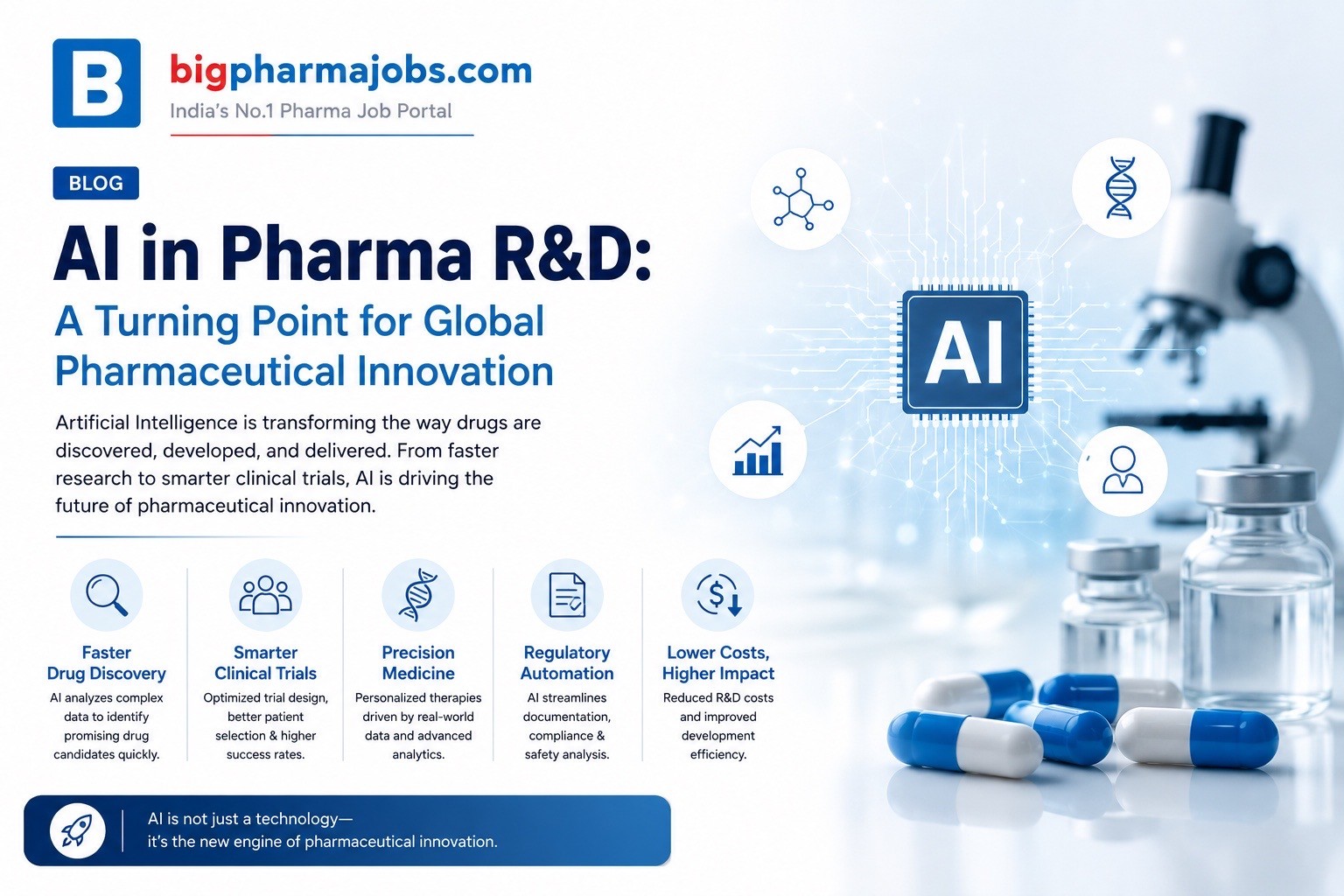
AI in Pharma R&D: A Turning Point for Global Pharmaceutical Innovation
The pharmaceutical industry is undergoing a major transformation as artificial intelligence (AI) becomes deeply embedded in research and development (R&D). Leading organizations, including major global pharma companies highlighted in the PricewaterhouseCoopers healthcare and life sciences insights, emphasize that AI is no longer experimental—it is now a core driver of innovation across drug discovery, clinical trials, and precision medicine.
From accelerating molecule identification to optimizing clinical trial design, AI is reshaping how drugs are developed, tested, and delivered to patients worldwide.
This shift is not just technological—it is structural. Pharma companies that successfully integrate AI into their R&D pipelines are expected to achieve faster innovation cycles, reduced costs, and significantly improved success rates.
How AI is Transforming Pharma R&D
AI is impacting nearly every stage of pharmaceutical research:
1. Drug Discovery Acceleration
AI algorithms analyze massive biological datasets to identify potential drug candidates in a fraction of the traditional time. What once took years in lab research can now be explored in months.
2. Smarter Clinical Trials
AI helps optimize:
Patient recruitment
Trial design
Data monitoring
Outcome prediction
This reduces trial failure rates and improves efficiency in late-stage development.
3. Precision Medicine
AI enables personalized treatment approaches by analyzing:
Genetic profiles
Patient history
Real-world evidence
This is pushing pharma toward highly targeted therapies instead of one-size-fits-all drugs.
4. Regulatory and Documentation Automation
Pharma companies are increasingly using AI to:
Draft regulatory submissions
Analyze safety data
Automate compliance reporting
This reduces administrative burden and speeds up approval timelines.
Industry Momentum: AI Moving from Experiment to Core Strategy
Recent global pharma trends show a clear shift:
AI is now integrated into core R&D workflows rather than pilot projects
Companies are adopting “agentic AI” systems that can independently plan and execute research tasks
Pharmaceutical firms are using AI to compress drug development timelines significantly
This transformation reflects a broader industry reality: AI is becoming the backbone of pharmaceutical innovation, not just a supporting tool.
Real-World Impact on Pharma Companies
Global pharmaceutical leaders are already investing heavily in AI-driven transformation:
Faster molecule discovery cycles
Reduced R&D failure rates
Improved supply chain efficiency
Lower clinical development costs
Stronger portfolio expansion strategies
According to industry insights, AI-driven systems could unlock hundreds of billions in value across global healthcare systems in the coming decade.
India’s Growing Role in AI-Powered Pharma R&D
India is becoming a strategic hub for global pharmaceutical innovation, especially through:
Global Capability Centers (GCCs)
AI-enabled R&D support teams
Clinical data management hubs
Regulatory and pharmacovigilance operations
Companies like Novo Nordisk, Eli Lilly, and others are increasingly expanding AI-led operations in India, making it a key contributor to global drug development pipelines.
Career Opportunities in AI-Driven Pharma
The rise of AI in pharma is also creating new job roles and skill demand:
High-demand roles:
AI/ML in healthcare analysts
Clinical data scientists
Pharmacovigilance specialists
Regulatory AI specialists
Bioinformatics experts
R&D project analysts
Key skills required:
Data science & AI tools
Clinical research knowledge
Regulatory understanding
Statistical modeling
Pharmaceutical domain expertise
For professionals in India, this is one of the fastest-growing career segments in the life sciences industry.
Future of Pharma R&D with AI
The future pharmaceutical R&D ecosystem will likely be:
Fully AI-assisted drug discovery pipelines
Predictive clinical trial systems
Real-time patient data integration
Automated regulatory workflows
Personalized, precision-based treatments
Experts suggest that AI will eventually enable “continuous drug development systems” where research, testing, and optimization happen simultaneously.
Key Takeaways
AI is transforming pharmaceutical R&D from discovery to commercialization
Clinical trials are becoming faster, smarter, and more efficient
Pharma companies are adopting AI at scale, not just experimentation level
India is becoming a global hub for AI-driven pharma operations
New career opportunities are emerging in AI-powered life sciences
FAQ Section
What is AI used for in pharma R&D?
AI is used for drug discovery, clinical trial optimization, patient data analysis, and regulatory automation.
How does AI reduce drug development time?
AI analyzes biological and clinical data faster than traditional methods, reducing research and trial timelines significantly.
Which pharma companies use AI?
Most global pharma companies, including Novo Nordisk, Eli Lilly, Pfizer, and others, are actively integrating AI into R&D.
Is AI replacing scientists in pharma?
No. AI supports scientists by handling data-heavy tasks, while human expertise remains essential for decision-making.
Weekly newsletter
Get the latest blog updates, practical hiring insights, and featured reads delivered straight to your inbox.
Read about our Privacy Policy.